Everything on this page is free and comes from a plane I actually built and flew on camera. Not all of it is a plan: each card says whether it is a dimensioned cut guide, a build you can copy from the write-up, or a no-plan experiment. Start with the 30-inch, 3-channel trainer: two $1.50 sheets of foam board, a measured cut list with a printable one-page cut guide, about two hours of building, and roughly $140 all-in the first time. The other plans scale from a $1 single-sheet quickie to a 79½-inch cargo hauler — dimensions below, full build write-ups behind every card.
Free, hand-measured plans for a 30-inch foam-board trainer you can cut from two sheets of dollar-store foam board. Dimensions, electronics, wiring, and the first flight are all documented from the build that flew on camera. The refined one-hour CAD version is a separate, paid plan set.
My most-watched build and the plane I tell every beginner to make first. About 2 hours and two sheets of foam board, with the full parts list, wiring, radio setup, and first-flight guide on one page.
Full plan & build guide → PrintableThe 30-inch trainer as a print-and-cut sheet: wing blank ≈16–17″×30″, fuselage strip 10–11″×30″, tail sizes, throws, and setup targets. Print it, tape it over the bench, build.
Print the cut guide → Experiment · no plansAn improvised build challenge, not a design to copy: a whole flying airframe from a single sheet of foam board in half an hour — C-channel folds, a scored-camber airfoil, and its tested CG one-third back (that plane's number, not the general rule). The cheapest possible way to find out if you love this hobby.
See the 30-minute build → Build from the write-upAn undercambered wing that makes lift at walking pace. Full specs on the page: motor, ESC, CG at ~2″ from the leading edge, and the transmitter settings. Hand-launch, belly-land on grass.
See the slow flyer specs → Plans available · the Mk IIThree planes against the clock. The 1-hour build — straight wing, spar, dihedral, box fuselage — flew so well it embarrassed the 1-day bush plane with flaps, LEDs, and 3D-printed gear. Both are on the page.
See all three builds → Big build · experiment, no plansNo plans, just foam and trial and error: a thick airfoil for slow-speed lift, spars four foam layers deep, a working cargo door, and the CG fix that turned a scary maiden into a flyer. Not a first build — a goal build.
See the 5-foot build →These plans are fixed sizes that I know fly. The Airplane Designer generates a new plan for any wingspan from 18 to 400 inches — chord, CG, dihedral, power system, and a to-scale drawing, sized around how you want it to fly.
Here's exactly how the foam breaks down on the first trainer. Sheet 1 becomes the wing: one 30″-long blank about 16–17″ wide — the bottom skin plus the top skin that folds over the leading edge — with the ~1″ spar strip cut from the offcut. Sheet 2 becomes the fuselage and tail: a 10–11″×30″ strip folds into the 2½″ box fuselage, and the horizontal stab (5″×12″), vertical fin (8″×5″), and doublers come out of what's left. Total airframe cost: about $3 in foam. Cut a couple of inches long where you can and trim to fit — foam board forgives.
That trainer, built and flown on camera — the same 30-inch wing, box fuselage, and electronics the cut list above describes. The full build is here: How to Build a Super Simple RC Airplane for Beginners.
The 5-footer is the plan everyone wants to build first, and it's the one that ends the hobby for people. Big planes aren't just scaled-up small planes — my 79½″ cargo plane needed spars four foam layers thick, real current, and a heavier wallet when it hit the ground. A 30-inch plane crashes for pocket change and rebuilds in an evening, which is exactly what you want while your thumbs are learning. Build the 30-inch class until landings are boring, then go big. If you're brand new, the Start Here path puts the whole sequence in order, and my first-plane parts list covers the electronics all of these small plans share.
Plan picked? Get the matched motor, ESC, battery, prop and servo set sized to that exact wingspan.
Join and I’ll send the free starter checklist today — and every new foam-board plan the day it goes up. No spam, unsubscribe anytime.
The airplane this site is built around, as plans or cut for you, and the small parts I use on every build.
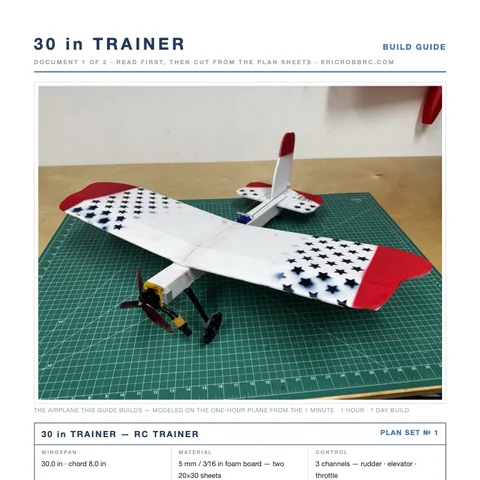 ER Sparrow Mk II Pre-Cut KitEvery foam part laser-cut and scored, the motor mount, the skewers, and the plans. Add your electronics and glue.$29.99See the kit →
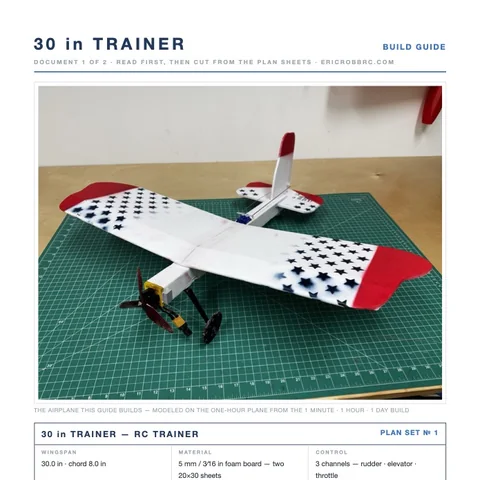 ER Sparrow Mk II PlansTrue-1:1 cutting templates and the 8-page build guide for the 30-inch one-hour trainer. Print at home or at a print shop.$8Get the plans →
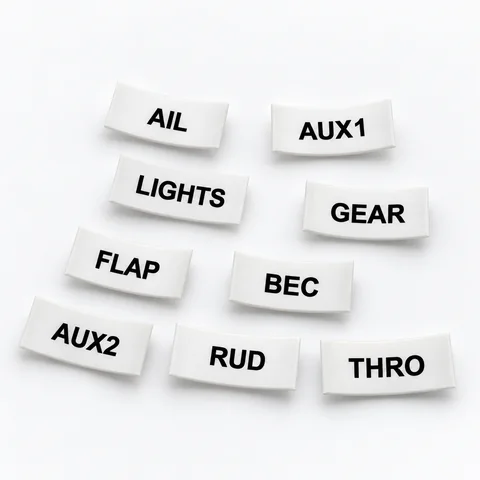 Servo Lead Heat-Shrink LabelsAIL, ELE, RUD, THRO and the rest, shrunk onto the lead so the receiver bay reads itself. Four packs.from $19.99See the label kit →
