The battery is your plane's fuel tank — and buying the wrong size is how beginners end up with a plane that won't climb or an ESC that lets the smoke out. Here's what S, mAh, and C actually mean, how to match a pack to your plane, and the exact packs I fly by size.
Last reviewed: August 2026
Match the LiPo to the plane: a 30-inch foam trainer flies on a 3S 1300–1500mAh pack, and bigger or faster planes step up in capacity and cell count with the ESC. Buy two or three packs, make sure the plug matches your ESC, and get a balance charger — charging at 1C is the conservative rule unless the pack's label says otherwise.
Same 1300mAh pack, different C-rating. Punch the throttle and the low-C pack's voltage sags — that's the plane that won't climb — while the 75C pack (~97A on tap) barely dips. Too low a C-rating and the pack sags, puffs, and dies early.
Match the cell count to your ESC/motor first, then pick capacity for flight time. Not sure what your setup pulls? The RC calculators do the C-rating and flight-time math, and the Checklist Builder sizes the whole power system for your wingspan.
A LiPo is only as safe as how you charge it. A proper balance charger is not optional — never use a generic wall charger. Grab one with the pack:
Once the charger is on the bench, the setting to get right is the charge current — match the amps to the pack's capacity, so a 1300mAh pack charges at 1.3 amps and a 4000mAh pack at 4 amps. The full write-up is here: Lipo Battery Charger Amperage Settings.
Buy the cell count your motor/ESC calls for, then the capacity that fits your plane. For the 30–48-inch foam trainer most beginners build, that's a 3S 1300–1500mAh pack — the workhorse size. Smaller park flyers take a 3S 850mAh; bigger sport planes step up to 4S, and giant/cargo builds to 6S. Whatever you fly, own two or three packs so a flying session isn't over after one flight, and buy the charger at the same time. If the rest of the chain the pack has to satisfy is still fuzzy — what the ESC does with that voltage, and why the motor decides the cell count — how the five core RC electronics parts work together covers it in plain English.
Made here for the battery box and the bench.
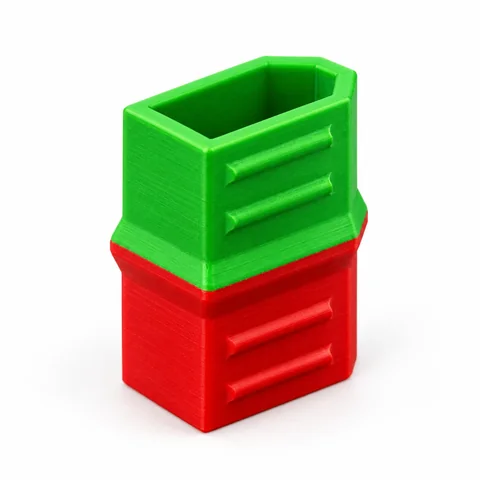 XT60 Battery Status CapsGreen end out: charged and ready. Red end out: flown. Twelve caps, so every pack in the box tells you.$11.99See the caps →
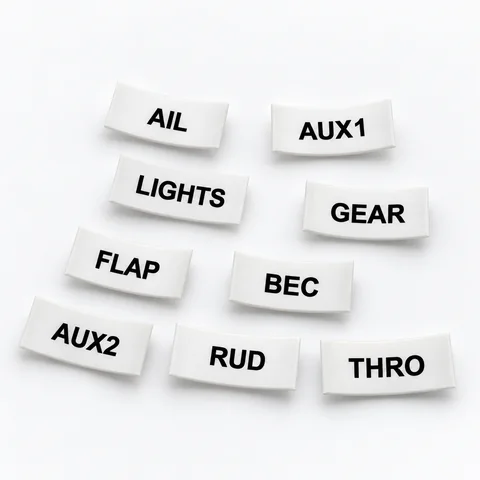 Servo Lead Heat-Shrink LabelsAIL, ELE, RUD, THRO and the rest, shrunk onto the lead so the receiver bay reads itself. Four packs.from $19.99See the label kit →
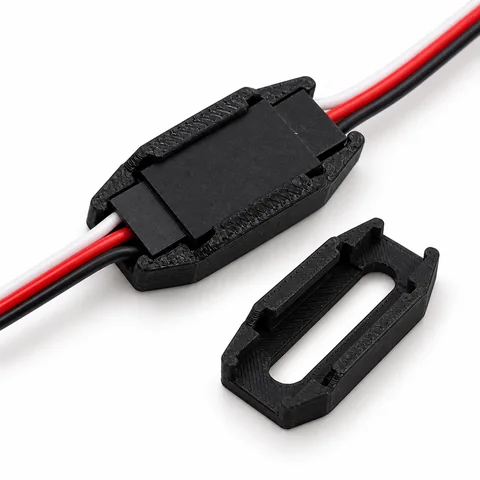 Servo Connector Safety LocksFifty locks that fit around a joined servo connection so an extension out in a wing stays plugged in.$14.99See the locks →
