A drone pilot chased one of my planes recently — flew a great line, but the camera pointed the wrong way, and most of the footage was useless. That one afternoon explains why 360-capture drones matter. I made three videos about the Avata 360; this page is all of it in one place, plus the detail the shorts didn't have room for.
Chase footage of RC planes is brutally hard: two moving aircraft, one camera, and one chance. With a normal drone, whatever angle you filmed is what you're stuck with — a perfect flight path with the camera pointed 30° off the subject is a wasted battery.
A 360 drone records everything around it, all the time. After the flight, you drop a virtual camera into that sphere of footage and frame the shot you wish you'd gotten: in front, behind, locked on the subject, whatever. One flight becomes three or four different shots. For anyone filming RC aircraft — or being filmed — that's not a gimmick, it's the whole game.
How it works, in one paragraph: the drone stitches two ultra-wide lenses into a full spherical (equirectangular) video. In the editor you pan/tilt/zoom a virtual camera inside that sphere and export a normal flat video. The catch with most 360 cameras is resolution — cropping a small window out of the sphere throws away pixels. That's why the Avata 360's 8K/60fps on 1-inch sensors matters: after reframing you still land at a crisp usable resolution instead of mush.
I put footage from both side by side — night stadium panoramas and coastal runs. Honest scorecard:
| DJI Avata 360 | Antigravity A1 | |
|---|---|---|
| Image | 1-inch sensors, 8K/60 — cleaner, sharper, holds detail when reframed | Softer; fine unreframed, degrades when cropped |
| Range | Up to 20 km | Up to 10 km |
| Obstacle sensing | Stronger, including night-level detection | Basic |
| Portability | Bigger, heavier | Wins — lighter, easier to pack |
| Battery life | Good | Wins |
My take: if the footage is the point, the Avata 360 is the better pick — image quality, double the range, and obstacle sensing I trust in low light (with built-in prop guards, it's also the one I'd hand to a newer pilot). If you hike to your flying spots and value pack weight over pixel-peeping, the A1's portability and battery life are real advantages.
Auto-transcribed from the video, so expect the odd mis-heard word. Here so you can search or skim what was said without watching.
I had a drone pilot chasing one of my airplanes the other day and he actually did a really good job but the camera was pointed in the wrong direction and most of the footage was useless. And that's the problem with drones these days. You can do a great job flying but if the camera is not pointed in the right direction the footage is useless. That's what's so intriguing to me about this new era of drones with 360 cameras on them. Like the DJI Avada 360.
You don't have to aim the camera when you're flying. It captures everything around you 360. So after the flight you can pick the angle, change the framing, follow the subject or turn one flight into multiple usable shots. That means less wasted footage and a much better chance of actually getting the shot you wanted. And the quality is not just average 360 footage.
It has one inch sensors, shoots at 8k at 60 frames per second so the image still looks clean and detailed. And with its optical sensing and built-in prop guards you don't have to worry much about flying even if you're not a professional. So for me that's a big win. The Avada 360 helps you come home with usable footage even if you didn't get it perfect in the moment.
Everything else on this site is free; these are what pay for it.
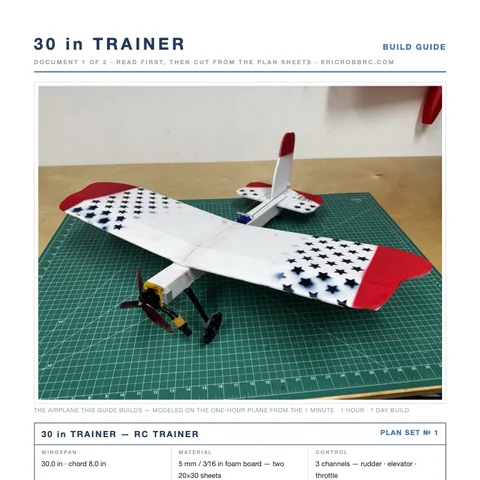 ER Sparrow Mk II Pre-Cut KitEvery foam part laser-cut and scored, the motor mount, the skewers, and the plans. Add your electronics and glue.$29.99See the kit →
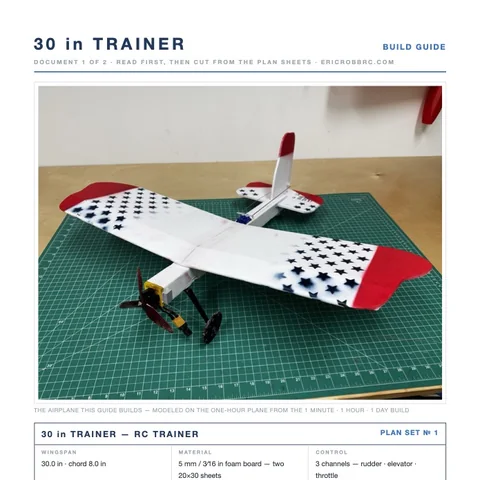 ER Sparrow Mk II PlansTrue-1:1 cutting templates and the 8-page build guide for the 30-inch one-hour trainer. Print at home or at a print shop.$8Get the plans →
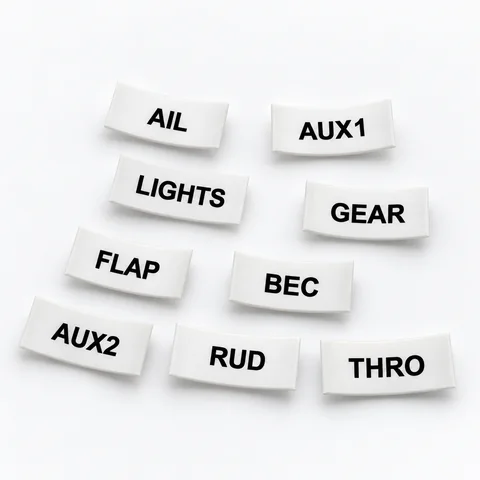 Servo Lead Heat-Shrink LabelsAIL, ELE, RUD, THRO and the rest, shrunk onto the lead so the receiver bay reads itself. Four packs.from $19.99See the label kit →
