You already own some of it. Enter the parts you have — a motor, a prop, an ESC, a battery, any three of them — and this works out the ones you don’t, with the current, watts, flight time and the warnings that save a controller.
Fill in any three of motor Kv, battery cells, propeller size and ESC rating. The rest is arithmetic: a propeller’s power demand rises with the cube of rpm, the fourth power of diameter and the first power of pitch, and current is that power divided by pack voltage. Everything else — ESC size, C rating, flight time — follows from there.
There is no table of blessed combinations here. Every number is solved from what you typed, using two relationships that hold for any electric setup.
A propeller’s power demand. Power rises with the cube of rpm, the fourth power of diameter, and the first power of pitch. That single fact explains most burnt ESCs: one inch of extra diameter on a 10-inch prop asks for about 46% more power at the same rpm, while an inch of extra pitch asks for about 21%.
A brushless motor’s speed. Unloaded it turns Kv times the pack voltage. With a propeller on it, expect roughly 70% of that. Add a cell without changing the prop and the rpm rises by the voltage ratio, power by its cube, and current by its square — which is why 3S to 4S nearly doubles the amps.
From those two, current is power over voltage, ESC size is current with headroom, C rating is current over capacity in amp-hours, and duration is capacity over current. Static thrust comes from momentum theory, derated to what a real propeller achieves standing still.
How accurate is it? The constants were checked against three setups with published numbers before this went live: a Spektrum Avian 5065 at its rated 1200 watts solves to the 17-inch prop Spektrum recommends, Eric’s ER Moth solves to the 5-inch prop it actually flies, and an APC 10x4.7 at 8000 rpm solves to within a few watts of APC’s own figure. Treat the answers as the right size and the right ballpark — a wattmeter on your own bench is still the final word.
This tool is for when you already own something. If you are starting from nothing, the other two are quicker.
Small parts from my own bench that make the wiring side of a build cleaner.
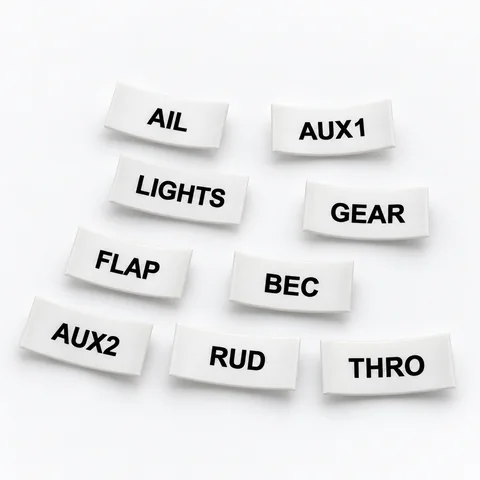 Servo Lead Heat-Shrink LabelsAIL, ELE, RUD, THRO and the rest, shrunk onto the lead so the receiver bay reads itself. Four packs.from $19.99See the label kit →
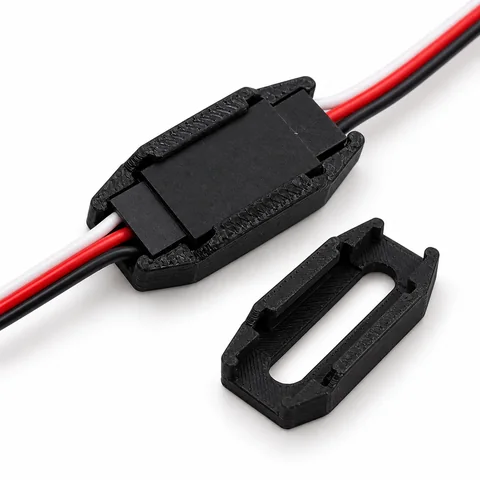 Servo Connector Safety LocksFifty locks that fit around a joined servo connection so an extension out in a wing stays plugged in.$14.99See the locks →
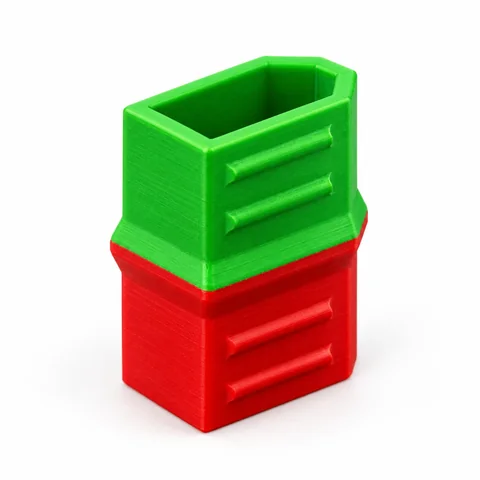 XT60 Battery Status CapsGreen end out: charged and ready. Red end out: flown. Twelve caps, so every pack in the box tells you.$11.99See the caps →
