Size everything from the wingspan, then make the parts agree: the prop sets how much current the motor pulls, the ESC must be rated above that draw with margin, and the battery needs enough cells and C-rating to deliver it. For a 24–36″ foam plane that's a 2212-class ~1400Kv motor, 30A ESC, 8″ prop, and a 3S 850–1300mAh pack. Tap your wingspan below for the matched set I actually fly.
If you already have a motor, a prop or an ESC in a drawer, enter what you have and the RC Parts Matcher works out the parts you don't — with the current draw, flight time and the warnings behind each answer.
Open the Parts Matcher →Each set is a matched starting point for scratch-built foam planes in that size — the same data behind my Checklist Builder. New to what these parts even do? RC electronics explained in plain English introduces the battery, ESC, motor, receiver and servos first.
👆 Tap a wingspan band to see its matched motor, ESC, prop, battery, and servos.
Starting points, not guarantees — always check your motor's prop chart and your ESC/battery ratings before flying. As an Amazon Associate, I earn from qualifying purchases.
This page matches the power system. The Checklist Builder adds plane type, flying style, control surfaces, and your radio brand — and hands back the full buyable electronics list, receiver and all.
My first-plane build sits in the 24–36″ band: a 2212-class ~1400Kv motor on a 9×6 prop, a 30A ESC, and a 3S 1300mAh pack. Check the agreement: that motor-and-prop combo typically measures under 20A wide open (confirm your own with a wattmeter), the 30A ESC covers it with margin, and the pack at 30C can deliver about 39A (1.3Ah × 30). Every link in the chain is rated above the one before it — that's the whole discipline. Get one link wrong and it's the weakest part that burns, which is exactly what happened on my 30-minute plane: the first motor I grabbed didn't have the thrust for the airframe, and the plane wouldn't stay up until I swapped to a properly sized one.
The plane flies, but you want more pull, so you bolt on a prop one size bigger. More prop is more load: the motor now pulls more current at full throttle, and nothing else in the chain got upgraded. One prop size can be the difference between a 22A setup on a 30A ESC and a 32A setup on the same ESC — and the ESC is now the fuse. Any time the prop changes, re-check the full-throttle draw against the motor, ESC, and battery ratings. The C-rating calculator makes the battery half of that a ten-second check, and Battery & LiPo Basics explains what those pack numbers actually mean.
Power system matched. Get the full electronics list for your plane, then pick the pack that feeds it.
Small parts from my own bench that make the wiring side of a build cleaner.
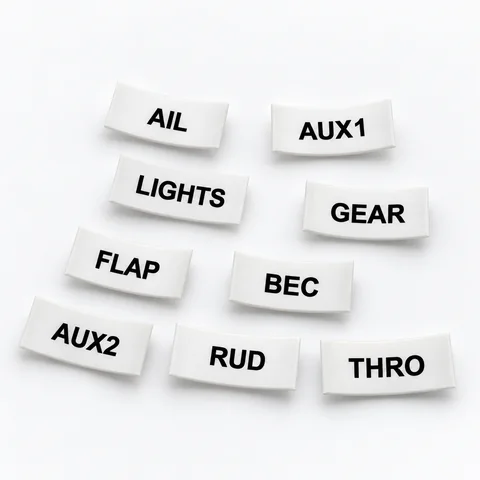 Servo Lead Heat-Shrink LabelsAIL, ELE, RUD, THRO and the rest, shrunk onto the lead so the receiver bay reads itself. Four packs.from $19.99See the label kit →
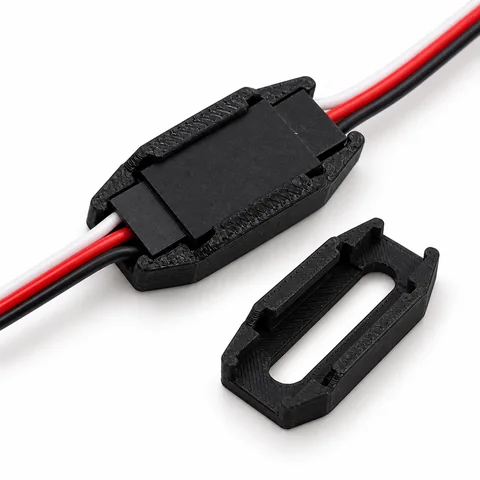 Servo Connector Safety LocksFifty locks that fit around a joined servo connection so an extension out in a wing stays plugged in.$14.99See the locks →
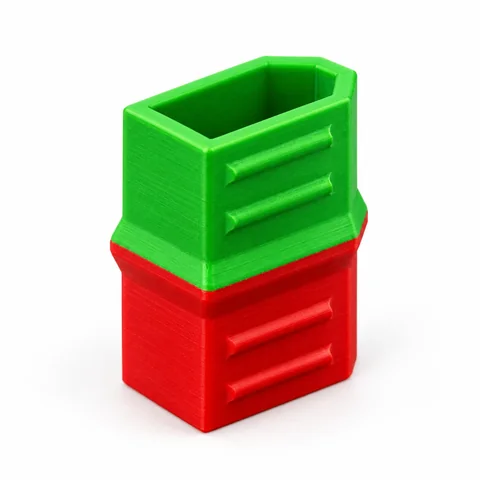 XT60 Battery Status CapsGreen end out: charged and ready. Red end out: flown. Twelve caps, so every pack in the box tells you.$11.99See the caps →
