Every material an OMTech CO2 laser and the Bambu Lab H2D laser module will cut, how thick each one goes, what size sheet fits the bed, and the two materials that will hurt you if you get them wrong. Then the exact sheets to order for each machine.
Last reviewed: September 2026
Both machines cut wood, and wood is what RC airplanes are made of. A Bambu H2D laser module cuts basswood plywood up to 5mm (10W) or 15mm (40W) inside a 310×270mm area — perfect for ribs and formers. An OMTech CO2 laser cuts the same wood plus clear acrylic, and its larger bed takes 12×24-inch sheets, so a whole wing's rib set comes off one piece. Neither machine may ever cut vinyl or PVC: the fumes are chlorine gas. Vinyl is cut with a blade instead.
An RC airplane needs three kinds of flat parts: light structural wood (ribs, formers, doublers), stronger wood where things bolt on (firewalls, joiners, servo rails), and clear or colored plastic for windows and lenses. A laser makes all three, but which laser decides how thick and how big.
| Material | Bambu H2D laser module | OMTech CO2 laser | What you build with it |
|---|---|---|---|
| Basswood / light plywood | Yes — 5mm (10W), 15mm (40W) | Yes — thicker, and faster | Ribs, formers, doublers |
| Baltic birch plywood | Yes, thin sheet | Yes — the workhorse | Firewalls, wing joiners, gear plates |
| Balsa | Yes | Yes | Light ribs, tail surfaces, sheeting |
| Dark / opaque acrylic | Yes (cuts, and engraves) | Yes | Panels, brackets, name badges |
| Clear acrylic | No — beam passes through | Yes | Canopies, windows, LED lenses |
| Depron / EPP foam | Not recommended | Yes, at low power | Foam wing cores, profile parts |
| Leather, cork, card, paper | Yes | Yes | Gaskets, templates, cowl seals |
| Anodized aluminium | Engrave only | Engrave only (with marking spray) | Labels, control-horn marking |
| Vinyl / PVC / faux leather | NEVER — toxic chlorine gas | NEVER — toxic chlorine gas | Use a blade cutter instead |
| Polycarbonate (Lexan) | No — melts, burns brown | No — melts, burns brown | Cut with shears or a blade |
| Carbon fibre sheet | No | No — toxic dust, ragged edge | Cut with a diamond wheel |
| Fibreglass / G10 | No | No — releases fine glass | Cut with a carbide bit |
If you already own an H2D, the laser module is the cheapest laser you will ever buy, because you have already paid for the motion system. It is a blue diode — 455nm — in two strengths, and Bambu publishes what each one does:
| 10W module | 40W module | |
|---|---|---|
| Cuts basswood plywood | up to 5mm | up to 15mm |
| Work area | 310 × 270 mm | 310 × 250 mm |
| Engraving speed | 400 mm/s | 1000 mm/s |
For RC that is a genuinely useful envelope. A 310×270mm window holds a full rib set for a 30-to-40-inch wing if you nest the parts, and 3mm basswood ply is exactly the stock most trainer ribs are cut from. Bambu sells its own sheets at 300×300mm — a hair under 12 inches square — with cut settings already in Bambu Studio, which removes the tedious part of a first laser project.
Two limits worth knowing before you buy. First, a diode beam is blue light, and clear acrylic simply lets blue light through: it will not cut it, no matter how slowly you go. If you want canopies and light lenses, you want CO2. Second, the bed is the bed — 12 inches is the ceiling. Fuselage sides for anything bigger than a park flyer have to be split and joined.
Sheets at or just under 300×300mm, 3mm thick, in that order of usefulness: basswood plywood for ribs and formers, 1/8-inch plywood for firewalls and anything that takes a screw, and a mixed trial pack if you have not decided which wood you like sanding.
And for vinyl — the trim, numbers and decals that make a finished plane look finished — you want Bambu's cutting module, which swaps the laser for a drag knife. Same machine, same 300×300mm sheets, no fumes.
A CO2 tube fires at 10,600nm — deep infrared — and that wavelength is absorbed by nearly everything organic, which is why CO2 cuts the things a diode cannot. Clear acrylic is the headline: cast acrylic cut on CO2 comes off with a flame-polished, glass-clear edge, so canopies and LED lenses need no finishing at all. Foam is the other one; at low power a CO2 will slice Depron cleanly, which a diode tends to melt.
The bigger difference for airplane builders is not the material list, it is the bed. An 8×12-inch K40-class bed cuts formers. A 20×28-inch bed takes 12×24-inch sheets, and that is the size where a whole rib set — every rib for one wing, tapered correctly, nested on one sheet — comes off in a single job with no seams and no re-registering.
The price of that capability is that a CO2 is a shop tool. It wants ducted exhaust to outdoors, water cooling on the bigger machines, and eye-safe operation every single time. It is not a thing you run on a desk next to where you sleep.
Baltic birch in 1/8-inch is the material to learn first: void-free plies, consistent thickness, and it cuts and glues predictably — it is what kit manufacturers cut. Add 12×24-inch poplar for the long parts, and both clear and opaque acrylic once you want windows and panels.
Laser specs are quoted in millimetres and hobby wood is sold in inches, which is a small, constant annoyance. The translation:
Two practical notes. Cut thickness is not a promise of a good cut — near the limit you get charred, tapered edges and parts that need sanding to fit. Stay one step under the rating for anything that has to slot together. And every one of these numbers assumes air assist is running; without it the smoke sits in the beam path and the same cut takes twice the passes.
If you already own an H2D and build planes under about 40 inches, the laser module is the obvious move — you are buying a laser for the price of an accessory, and 3mm ply at 12 inches square covers a trainer's whole structure. If you are buying a machine specifically to cut, or you build bigger than 40 inches, or you want clear canopies, buy CO2 and buy the biggest bed you can vent.
3D printer buyer's guide → Laser cutter buyer's guide →
No, and it should never be tried. Vinyl is PVC, and lasering PVC produces hydrogen chloride gas — corrosive to your lungs and to the machine. Bambu sells vinyl for the H2D, but it is labelled for blade cutting and is used with the cutting module, not the laser.
No. Clear acrylic is transparent to the blue 455nm wavelength, so the beam passes through instead of being absorbed. Dark and opaque acrylic cut fine. Clear acrylic needs a CO2 laser.
3mm (1/8 inch). It is the standard for ribs, formers and doublers, every laser cuts it, and it is stiff enough that parts do not warp while you build.
The H2D laser works within 310×270mm, so 300×300mm or 12×12-inch sheets are the right buy. OMTech beds run from 8×12 inches up to 20×28 inches — on the larger machines, 12×24-inch sheets let a full wing's ribs come off one piece.
No. The resin burns rather than cuts, the edge comes out ragged, and the dust is a genuine health hazard. Carbon sheet is cut with a diamond wheel, wet, with a respirator on.
The airplane this site is built around, as plans or cut for you, and the small parts I use on every build.
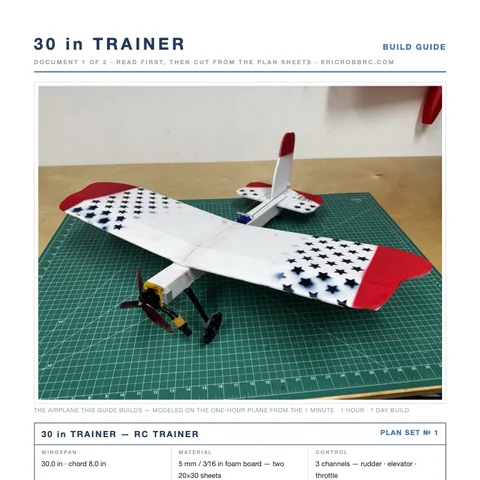 ER Sparrow Mk II Pre-Cut KitEvery foam part laser-cut and scored, the motor mount, the skewers, and the plans. Add your electronics and glue.$29.99See the kit →
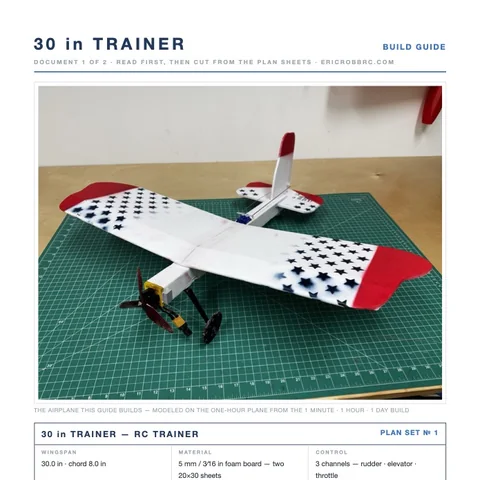 ER Sparrow Mk II PlansTrue-1:1 cutting templates and the 8-page build guide for the 30-inch one-hour trainer. Print at home or at a print shop.$8Get the plans →
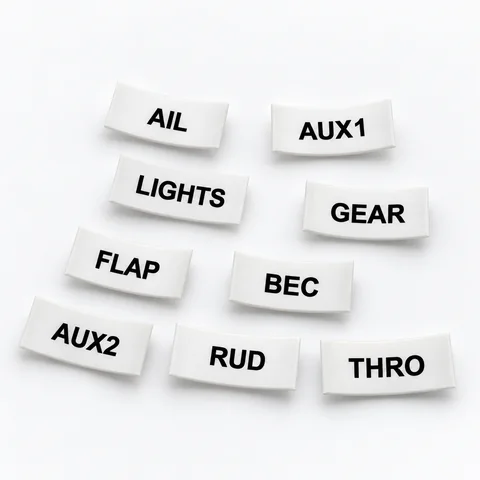 Servo Lead Heat-Shrink LabelsAIL, ELE, RUD, THRO and the rest, shrunk onto the lead so the receiver bay reads itself. Four packs.from $19.99See the label kit →
