RC has a dozen battery connectors and no standard, so your new pack, your charger and your plane can all arrive with different plugs. Find yours by shape and color below — then the "it doesn't fit" section covers the fix that doesn't involve soldering.
Current figures are the commonly published ceilings for each connector family and vary by brand — treat them as ballpark, and always defer to what your pack and ESC are rated for.
No connectors in that group.
This is the most common version of the problem, and it does not require replacing anything. Buy an adapter lead: the battery's plug on one end, your charger's on the other, a few dollars, no soldering, no risk. Keep one for each combination you own and the problem disappears.
If you'd rather change the plug on the battery itself, the rule that matters: cut and solder one lead at a time. Never have both battery leads stripped simultaneously — touching them together shorts the pack, and a shorted LiPo is a fire, not an inconvenience. Insulate the finished lead with heat shrink before you touch the second one.
The real long-term fix is boring: pick one connector and standardize. XT60 is the sensible default for most beginner and sport electric planes — cheap, widely available, and rated well past what a 3S or 4S setup draws. Convert everything to it once and you stop buying adapters.
For the planes on this site — 30 to 60 inches, 3S or 4S, drawing 20 to 40 amps — XT60 is the answer, and it's what my own packs and ESCs wear. Small park flyers on 2S with tiny motors get away with XT30 or JST-RCY and save the weight. Big 6S cargo builds pulling serious current move up to XT90 or EC5. The C-rating calculator tells you the amps you're actually working with; pick a connector comfortably above that.
Motor-to-ESC connections are a different job: those are 3.5mm bullet connectors (or 4mm on bigger motors), three of them, unlabeled — because the order genuinely doesn't matter until you check which way the prop spins. See the wiring diagram for where each one lives in the chain — and if "ESC" and "BEC" are still new words, what each RC electronics part does is the plain-English version.
See exactly what plugs into what for your parts, and what the charger settings should be for your pack.
Made here for the battery box and the bench.
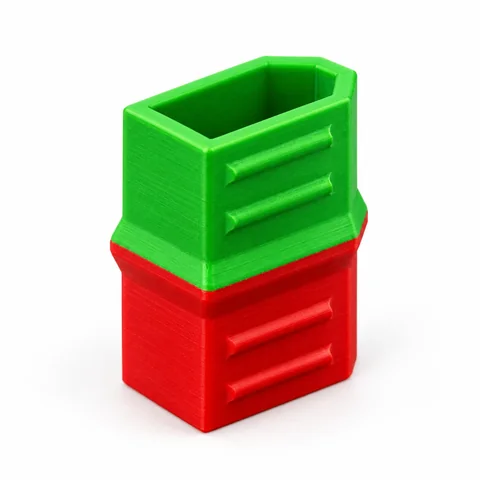 XT60 Battery Status CapsGreen end out: charged and ready. Red end out: flown. Twelve caps, so every pack in the box tells you.$11.99See the caps →
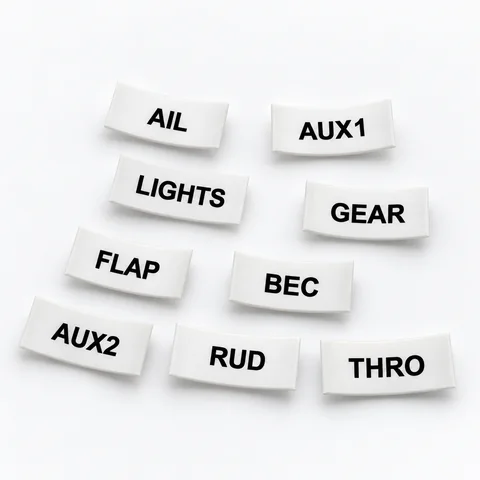 Servo Lead Heat-Shrink LabelsAIL, ELE, RUD, THRO and the rest, shrunk onto the lead so the receiver bay reads itself. Four packs.from $19.99See the label kit →
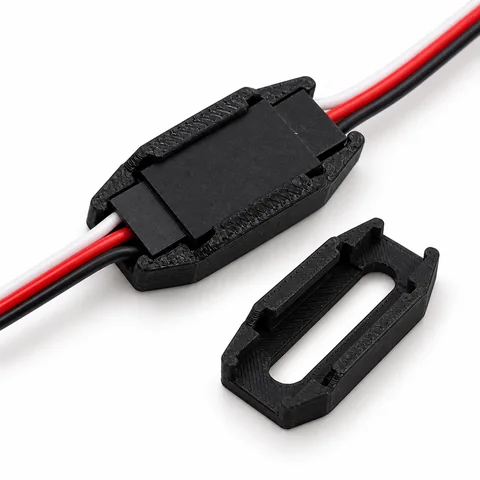 Servo Connector Safety LocksFifty locks that fit around a joined servo connection so an extension out in a wing stays plugged in.$14.99See the locks →
